


Legendary: Game of Heroes
4.216.41K Reviews
App Specs
- Version
- 3.19.22
- Updated On
- License
- Free
- Downloads
- 5,000,000+
- Developer
- PerBlue Entertainment
- Categories
- Role Playing
- Platform
- Android
Screenshots

 Analysis by AppCompare
If you've been on the lookout for a mobile game that's a perfect blend of strategy, puzzle-solving, and card collection, Legendary: Game of Heroes might just be your next obsession. I’ve spent the last few days diving into its vibrant world, and let me tell you, it’s an adventure you won’t want to miss. Let’s dig into what makes this game tick.
What the purchase details mean in practice
One useful place to begin is the cost of getting started. This is a free role-playing game from PerBlue Entertainment, so there is no purchase price to try its mix of gem matching and hero cards. The Teen content rating is also worth considering if you are choosing a game for a younger player. I would treat the free entry point as an invitation to see whether the puzzle-and-roster combination suits you, not as a promise that every part of progression will be equally accessible without spending.
The purchase range runs from ninety-nine cents to one hundred ninety-nine dollars and ninety-nine cents per item. That is a wide spread, so I would decide on a personal spending limit before browsing any offers. The existence of paid items tells me that spending is part of the game’s economy; by itself, it does not tell me whether a particular purchase is necessary, how much progress it provides, or whether non-paying players are treated fairly in every mode. I would avoid assuming that the largest purchase is good value simply because it is available.
Immersive Gameplay
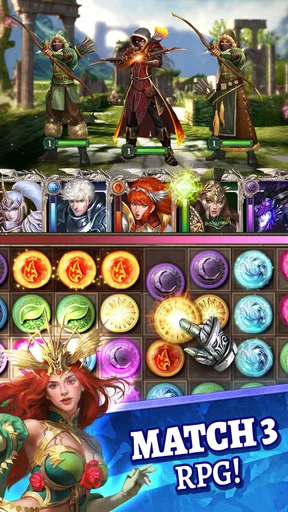
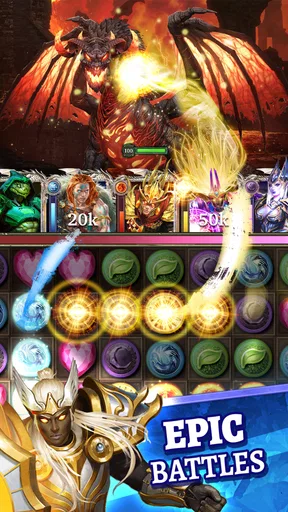
First off, the gameplay is where Legendary: Game of Heroes truly shines. It’s not just about matching tiles; it’s about strategically using your hero cards to unleash powerful attacks. The game seamlessly combines the mechanics of a match-3 puzzle with the depth of a card-based RPG. You start off with a basic set of heroes, but as you progress, you collect more cards and build your ultimate team.
The key decision is not only which match to make, but how that choice fits the team you have assembled. That gives each turn a little more weight than a straightforward tile puzzle, where matching the largest group is often the obvious move. I like that the card layer gives the board context: a strong match matters because of the heroes who can make use of it. If you enjoy planning several moves around a roster rather than playing a puzzle in isolation, this combination is the main reason to give the game a try.
The game offers daily missions and events that keep things fresh and exciting. You’re never really stuck doing the same thing, which is great because it keeps you engaged. Plus, the special events often come with unique rewards, so there's always an incentive to participate.
That steady supply of things to check in on can be useful in short sessions, but it also creates a gentle pull to return regularly. I would treat missions and events as options rather than a checklist that must be cleared every day. A practical approach is to choose the activity that best fits the time you have, then stop when you have had enough. That keeps the routine enjoyable instead of turning a casual puzzle RPG into another obligation.
Worth Reading Before You Choose

EA SPORTS FC Mobile 26 Is a Bigger Football Game, but It Takes Time

Flipboard Shows What News Apps Must Do Beyond the Feed

Switching to Android Auto Means Rethinking Your Driving Routine

Google Calendar Makes a Crowded Week Easier to Manage

Ludo King Makes the Most of the Minutes Between Plans

Baby Panda World Brings Quick Play to Modern Phones, but Its Game Library Feels Busy
Stunning Visuals and Sound
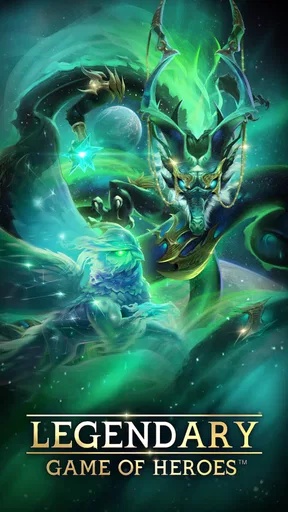
What really caught my eye (and ear) are the stunning visuals and immersive sound effects. The artwork is incredibly detailed, bringing each hero and monster to life with vibrant colors and intricate designs. The soundtracks are epic, perfectly complementing the high-stake battles you find yourself in. It’s like having a mini fantasy world in your pocket.
The presentation helps give the collected characters a sense of identity, which matters in a game where the roster is part of the appeal. Still, the visual spectacle is not the same thing as strategic depth: if you mainly want a calm, minimal puzzle with little fantasy dressing, the dramatic style may feel like more than you need. I would also think about where you plan to play. A quick session during a quiet break is a better fit for an audio-rich fantasy game than trying to follow every effect in a noisy commute.
Building Your Hero Roster
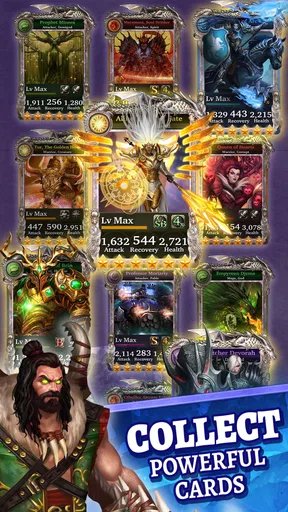
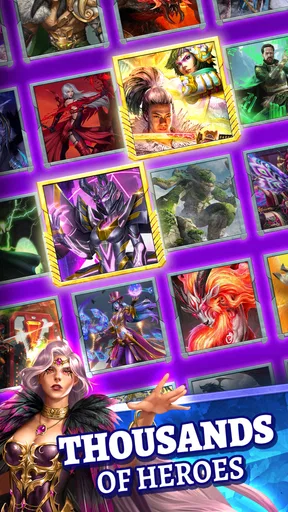
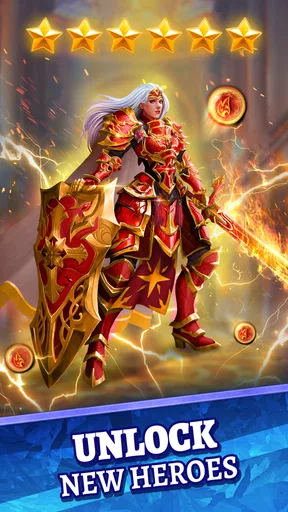
Now, on to one of my favorite parts — collecting and upgrading heroes. You start with a few basic cards, but as you play, you’ll get the chance to collect rare and legendary heroes. Each hero comes with unique abilities, which adds another layer of strategy to the game. You have to think about which heroes to upgrade and when to use their special skills during battles.
My most useful roster-building habit is to pause before spending upgrade resources and ask what a card actually contributes to the team I use. A rare card is not automatically a better choice for every lineup, and spreading improvements across every new arrival can make it harder to build a dependable core. I would experiment with a small group first, notice which abilities complement one another, and then invest with a purpose. That is a more deliberate way to learn the game than treating every new card as an immediate replacement.
Building the perfect team is no small feat, and it’s part of what keeps me coming back to the game. You can mix and match different heroes to see which combinations work best, adding a delightful layer of depth and personalization.
There is a trade-off here: experimenting is satisfying, but collecting and improving a large roster can make decisions feel less simple over time. If you prefer games where your choices are mostly tactical and each run starts on an even footing, a conventional match-3 puzzle may be a better fit. Here, team composition stays in the background even when you are focused on the board, so the game suits players who enjoy both immediate puzzle choices and longer-term collection decisions.
Community and Multiplayer Features
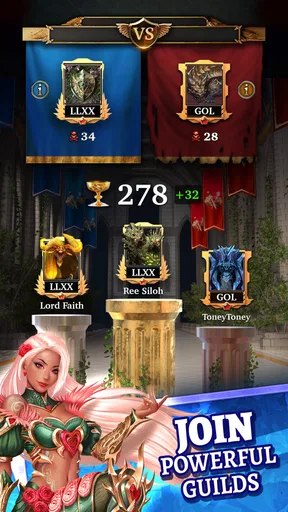
Alright, let’s talk about the social aspect. Legendary: Game of Heroes is not just a solo adventure. You can join guilds, participate in guild wars, and team up with friends to tackle challenging events. The community is pretty active, and there’s always a sense of camaraderie as you work together to climb the leaderboards.
Guild activities make this a more social choice than a typical single-player puzzle RPG. I would join a guild because I actually want the shared play, not just because it sounds like an efficient way to progress. A social commitment can be fun when you have time to participate, but it can feel like pressure if your schedule is unpredictable. If you would rather play entirely at your own pace and never coordinate with anyone, the solo parts may still appeal, but the community side will matter less to you.
Interacting with other players adds a whole new dimension to the game. Whether you’re strategizing with your guild or facing off against other players, the multiplayer features keep the game dynamic and entertaining.
For a realistic everyday use case, I can see this working as a short break game: open it when you have a little free time, pick one activity, and leave the longer guild or event commitments for a moment when you can focus. That division is useful because the puzzle element can be approached in small bursts, while community participation is more rewarding when you can give it attention. It also helps answer a practical question: you do not need to make every session a deep strategy session, but the game offers more than a quick board clear if you want to engage with the roster or other players.
Progress, pressure, and fairness
Progress in a collection-based RPG can feel exciting when a new hero opens up team possibilities, but it can also create a sense that there is always another upgrade to chase. The recurring missions and events add reasons to return, and the card roster gives those returns a longer-term purpose. My advice is to set your own pace rather than measuring enjoyment by how quickly your collection grows. If you are comfortable repeating activities and making gradual choices, that structure can be satisfying; if you want a short game with a clear ending and no ongoing routine, it may feel like too much upkeep.
It is reasonable to ask whether paying gives someone a competitive advantage. The game has in-app purchases, including items priced up to one hundred ninety-nine dollars and ninety-nine cents, but that fact alone cannot establish how purchases affect specific outcomes or how fair each competitive activity is. I would not equate a high-priced option with proof that spending is required, nor assume the opposite. If competitive balance is your main concern, approach guild and player-versus-player features with that uncertainty in mind and decide whether you enjoy the experience on its own terms, rather than treating a leaderboard position as a measure of value.
Who will enjoy it, and who may prefer something else
I would recommend this to someone who likes switching between match-based decisions and team-building, especially if collecting heroes is part of the fun rather than a chore. It is also a better fit for players who enjoy returning to missions, events, and social activities over time. The combination gives a session more texture than a basic tile-matching game, while the fantasy roster provides a reason to think about choices beyond the current board.
I would steer away if you mainly want a pure puzzle game with no collection layer, or if you dislike the idea of recurring events and a broad range of optional purchases. A traditional match-3 game is the simpler choice when you want the board to be the whole experience. A more linear role-playing game may suit you better if you want a focused story journey rather than a continuing cycle of building a team and taking part in activities. Those are not faults so much as differences in what each style asks from your time.
Monetization
Okay, let’s address the elephant in the room — monetization. Like many free-to-play games, there are options to purchase in-game currency and packs. While you can enjoy Legendary: Game of Heroes without spending a dime, buying premium items can enhance your experience and speed up your progress. Just remember, it’s perfectly possible to have a blast playing without breaking the bank.
In-app purchases are mostly geared towards those who want to advance quickly or collect specific heroes faster. It’s all about how you prefer to play.
For me, the safest way to approach optional spending is to wait until I understand what I enjoy about the game. A purchase can be tempting when I want a particular card or quicker progress, but that does not automatically make it worthwhile. I would set a firm budget, avoid buying in response to a frustrating stretch, and judge any item by whether it adds lasting enjoyment rather than a brief burst of momentum. The free starting point makes it possible to explore the core loop first; the wide purchase range makes that personal boundary especially sensible.
Version and practical expectations
The game was released on August 10, 2016, and its current version is 3.19.8. It requires Android 6.0 or later, which gives Android users a straightforward compatibility check before they install. Its average rating is 4.1 from around 173 thousand ratings, and it has more than 5 million installs. Those figures suggest that it has found a sizable audience, but they cannot tell you whether its particular mix of matching, collecting, and ongoing activities will suit your tastes. I would use the game’s own appeal to you—not popularity alone—as the deciding factor.
One question players often have is whether they should begin by chasing the strongest-looking card or learning the puzzle rhythm first. I would do the latter. Understanding how your current heroes work together gives you a better basis for judging future cards and deciding where to invest. Another sensible question is whether this is a good fit for occasional play. The mission and event structure encourages return visits, but you can still choose a manageable activity rather than trying to keep up with everything. For players who want a completely self-contained experience, that ongoing cadence may be a drawback.
Final Thoughts
In conclusion, Legendary: Game of Heroes is a captivating mobile game that offers a rich blend of strategy, puzzle-solving, and social interaction. Its stunning visuals and engaging gameplay make it a standout in the crowded mobile game market. If you love RPGs and enjoy the challenge of building and strategizing with a team of heroes, this game is definitely worth your time.
So, are you ready to forge your own legend? Dive into the world of Legendary: Game of Heroes and see what epic adventures await you. Happy gaming!
My trust verdict
My overall view is positive, with a clear caveat: the game’s appeal depends on enjoying an ongoing collection RPG, not just its matching puzzle. I like the way a board move connects to the heroes I have assembled, and the social activities give players another reason to return. At the same time, regular events, a growing roster, and optional purchases can make the experience feel busy for someone who wants a fully relaxed, strictly self-contained game.
I would try it for free, learn the basic rhythm, and see whether building a team feels rewarding before spending or committing to a guild. PerBlue Entertainment’s game has a substantial player audience, but that does not guarantee a perfect fit for every puzzle or RPG fan. If you enjoy making small tactical choices and gradually shaping a fantasy roster, it is worth a look. If you want a simple board game, a guaranteed spending-free competitive balance, or a game with a definite finish, I would choose something closer to those preferences instead.
Pros
- Stunning graphics enhance gameplay.
- Strategic depth with diverse hero abilities.
- Frequent updates keep content fresh.
- Active community for collaboration.
- Daily challenges offer great rewards.
Cons
- Can be pay-to-win at higher levels.
- Requires constant internet connection.
- Energy system limits playtime.
- Complex mechanics may overwhelm newbies.
- In-app purchases can be pricey.
FAQs for Legendary: Game of Heroes
What is the main objective of Legendary: Game of Heroes?
Legendary: Game of Heroes is a puzzle RPG that combines matching mechanics with card-based gameplay. Players aim to build a strong deck of heroes and engage in battles against various enemies. The objective is to strategize and optimize your team to conquer different challenges and progress through the storyline.
Is Legendary: Game of Heroes free to play?
Yes, Legendary: Game of Heroes is free to download and play. However, it offers in-app purchases for items such as hero cards, energy refills, and special packs. These purchases can enhance gameplay but are not essential for enjoying the game. Players can progress without spending money by participating in events and completing quests.
What are the system requirements for Legendary: Game of Heroes?
To play Legendary: Game of Heroes on Android, you need at least Android 4.4 or later. For iOS, it requires iOS 9.0 or later. Ensure your device has sufficient storage space and a stable internet connection, as the game relies on online connectivity for various features, including updates and multiplayer events.
How does the energy system work in Legendary: Game of Heroes?
In Legendary: Game of Heroes, energy is used to participate in battles and events. Energy replenishes over time, but players can also purchase energy refills through in-app purchases. Managing energy wisely is crucial, as it determines how often you can engage in gameplay activities without having to wait or spend money.
Can I play Legendary: Game of Heroes with friends?
Yes, Legendary: Game of Heroes offers multiplayer features that allow you to team up with friends. You can join guilds, participate in guild events, and collaborate with other players to tackle challenging bosses. Social features enhance the gaming experience by providing opportunities for cooperation and competition.


